Frequently Asked Questions…

Including:
What does a Clinical Psychologist do?
What happens in the first session?
Is it private?
What happens during therapy?
How often will we meet, for how long, and how many sessions will we have?
How much does it cost and do you accept health insurance?
Can I refer myself to you?
Do I have to tell you everything?
What if my problems aren’t ‘severe enough’?
What if I get emotional or cry?
What is CFT (Compassion Focused Therapy)?
What is ACT (Acceptance and Commitment Therapy)?
What is EMDR?
What is Integrative therapy?

What does a Clinical Psychologist do?
A Clinical Psychologist helps you understand how your mind works and gives you practical tools to handle life’s challenges more effectively. We are highly trained mental health professionals and scientists, who are experts on how the mind works and what may be getting in the way of you being the person you want to be and doing the things you want to do. We are trained to a high level in many different therapy styles, which means we can blend different approaches so therapy is tailored to you and your needs. Think of it like us having a ‘toolbox’, not just one tool like some therapists and counsellors, so we can adapt and combine therapy methods in a highly skilled, researched, and individualised way.
Sessions with me offer a space where you can talk openly, feel understood, and begin to make sense of what’s going on. I’ll work with you so we can put the puzzle pieces together and help you find a way through your difficulties.
What happens in the first session?
It’s totally normal to have worries before your first session, but in reality it’s usually much more relaxed and comfortable than people expect. Psychologists, like me, are highly trained to help put people at ease and guide the conversation.
All the appointments I offer are online using zoom and most of the first session is just talking. You don’t need to have clear goals or the “right words.” You can literally say - “I don’t really know where to start” and leave it to me to ask some questions to explore stuff a bit.
It can feel a bit like telling your story to someone who’s skilled at listening and understanding you.
While you’re talking and telling me your story, I’m quietly…
understanding how you think and feel
noticing patterns
figuring out how best to help you
I’m not judging you. I’m not analysing you in a scary way.
It’s more like me looking for patterns in your thoughts and behaviours, and considering simple, practical strategies to help you feel more in control, more confident, and better equipped to handle everyday challenges.
Is it private?
Everything we talk about stays private and notes are stored privately (www.writeupp.com/privacy).
The only time I might have to share information, even if you didn’t want me to, is if you say something that puts your safety or someone else’s at risk. This is about duty of care to you and others and is the same level of privacy as with your GP and other health professionals. I’ll always try and make you aware and discuss with you first if I’m going to need to share something with another professional.
What happens during therapy?
After the first session I will continue to go at a pace that suits you, exploring things in more detail, which might include your thoughts, feelings, past experiences, or patterns in your life. I will continue to use my wealth of professional experience to help you feel comfortable and understood, building a trusting, collaborative relationship over time.
Together we will start to notice links, maybe between your past and your present, or between certain thoughts, feelings and behaviours. These insights can help things start to make more sense, giving you the chance to find a different way forward with your life. Depending on your needs, I might introduce practical tools or strategies to help you cope. Each session we will work together to explore what’s getting in the way of you being the best version of you and living well, and work towards a new way forward with your life.
It’s normal for some sessions to feel more useful than others, and for some sessions to feel more difficult than others. I will always help you feel comfortable and ready to get on with your day before each session ends, but I will also encourage you to be extra kind to yourself for a while as therapy can bring up difficult thoughts and feelings. I will be with you every step of the way, checking in with how things are going, what’s helping, what’s changing, and whether anything needs to be adjusted.
How often will we meet, for how long, and how many sessions will we have?
Each session lasts 50 minutes, but there is an option to book shorter sessions of 30 minutes with me if fatigue and/or brain fog would make this more appropriate for you.
The frequency of sessions can largely be guided by you, but it does also depend on what we’re working on together in therapy as sometimes sessions need to be closer together to make the most therapeutic progress. I have some clients who I meet with weekly, some who I meet with fortnightly, and some who I meet with monthly.
How long we meet for depends on what we’re working on and the number of sessions needed to help you find your way. We’ll regularly review how it’s going, and decide together how many more sessions would be beneficial. I’m aware therapy is a big investment and so we’ll also discuss finances and take this into account when we decide how to move forward.
For some people they find that just having more information and guidance over a couple of sessions is enough, for others we may work together for over a year. It varies a lot and we’ll always make decisions about this together as a team.
How much does it cost and do you accept health insurance?
50 minute online therapy session - £120
Option for shorter 30 minute online therapy session if fatigue and/or brain fog is present - £70
I accept self-funding clients and am also registered with several major insurance companies.
Please make sure you check that your insurer will cover “psychology treatment” under your policy.





Can I refer myself to you?
Absolutely!
Please fill in the contact form and we can book in a free 15 minute introductory chat to see whether I’m the right fit for you. I look forward to hearing from and supporting you to change your life.
Listening
✳︎
Understanding
✳︎
Changing Lives
✳︎
Listening ✳︎ Understanding ✳︎ Changing Lives ✳︎
Do I have to tell you everything?
You don’t have to tell me everything, you’re in control of what you share and when.
If something feels too personal, it’s ok to say “I’m not ready to go into that yet.” I will completely respect that.
What if my problems aren’t ‘severe enough’?
If it matters to you, it’s valid and it matters to me.
You don’t need a crisis or major trauma to see a psychologist. You can come and see me if any everyday changes are leading to stress and worry.
What if I get emotional or cry?
That’s common and totally understandable. I’m used to these emotions and will help it feel ok for you.
People cry in sessions all the time. It’s actually a sign you’re letting things out and we’re getting somewhere.

What is CFT (Compassion Focused Therapy)?
Compassion Focused Therapy is a type of therapy founded by Dr Paul Gilbert that helps you change how you treat yourself on the inside, especially if your default is to be self-critical, anxious or ashamed.
The core idea is that your brain is not designed to make you happy, it’s designed to keep you safe.
Because of that your brain often:
Spots problems quickly and easily when there is change in life
Remembers your mistakes and reminds you of them when you’re trying to move forward
Talks to you in a harsh, critical way, which can get in the way of you adapting to change.
CFT isn’t about being soft or letting yourself off the hook.
It’s about creating an inner voice that helps you cope and improve, rather than one that beats you up and blocks your progress.
CFT says the harsh inner voice isn’t your fault, but you can learn to respond to it differently.

What is ACT (Acceptance and Commitment Therapy)?
ACT is a type of therapy that helps you handle difficult thoughts and feelings without getting stuck with them, so you can move forward with your life.
ACT teaches you that you don’t have to get rid of uncomfortable thoughts or feelings to live a fulfilled life when change happens.
Instead of getting stuck all the time you:
Accept the difficult stuff that comes with big changes in your life
Commit to actions that help you do more of what matters to you
Change often brings uncertainty, anxiety and a loss of control. ACT helps you in 3 key ways:
You stop fighting reality, which frees up energy for doing more of what matters to you.
You create some distance from your thoughts and feelings, which helps you think more clearly and move forward.
You focus on what really matters and take small actions in that direction, even when you feel anxious.


What is EMDR?



EMDR stands for Eye Movement Desensitization and Reprocessing. It’s a type of therapy used to help people process and recover from distressing or traumatic experiences.
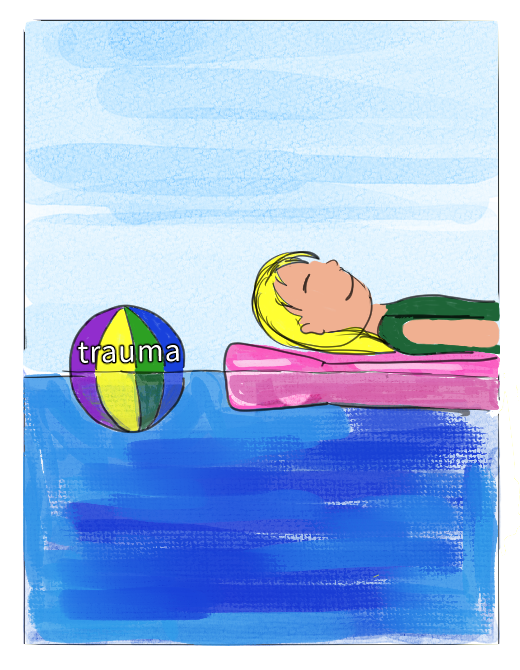
Sometimes, when something overwhelming or frightening happens, the brain doesn’t fully “file it away” properly. Instead, the memory can feel stuck, like this beach ball - like it’s still happening now and your trying to keep it away. This is why certain thoughts, images, or triggers can bring back strong emotions, anxiety, or physical reactions, as the beach ball bounces back in your face.
EMDR helps the brain finish processing those stuck memories.
During an EMDR session, you’ll be asked to briefly focus on a difficult memory while also doing something that engages both sides of your brain, such as following a moving ball on your screen or alternately tapping your shoulders.
While this might seem unusual, it helps your brain “unstick” the memory and reprocess it in a healthier way. Over time, the memory doesn’t disappear, but it becomes less intense, less distressing, and easier to think about without feeling overwhelmed.
In everyday terms:
The memory stays but is filed away properly in your brain
The emotional charge of the memory reduces
You gain distance from the memory, perspective and a chance to find a way forward
EMDR is structured, guided by a trained therapist, like myself, and doesn’t require you to talk in detail about everything that happened if you don’t want to. Many people find it helps them move past experiences that have felt stuck for a long time.
What is Integrative therapy?

Integrative therapy is a flexible, personalised approach Clinical Psychologists use to bring together different therapeutic ideas and techniques to suit you as an individual.
It’s about finding what works best for you, not trying to fit you into a single way of doing therapy.
Different types of therapy each offer useful tools. For example, some focus on how your thoughts affect your feelings, others explore past experiences, and some look at patterns in relationships. Integrative therapy draws from these approaches and blends them in a way that matches your needs, goals, and personality.
That means I will take the time to understand you as a whole person - your background, your current situation, and what you want from therapy - and then tailor the work accordingly.